
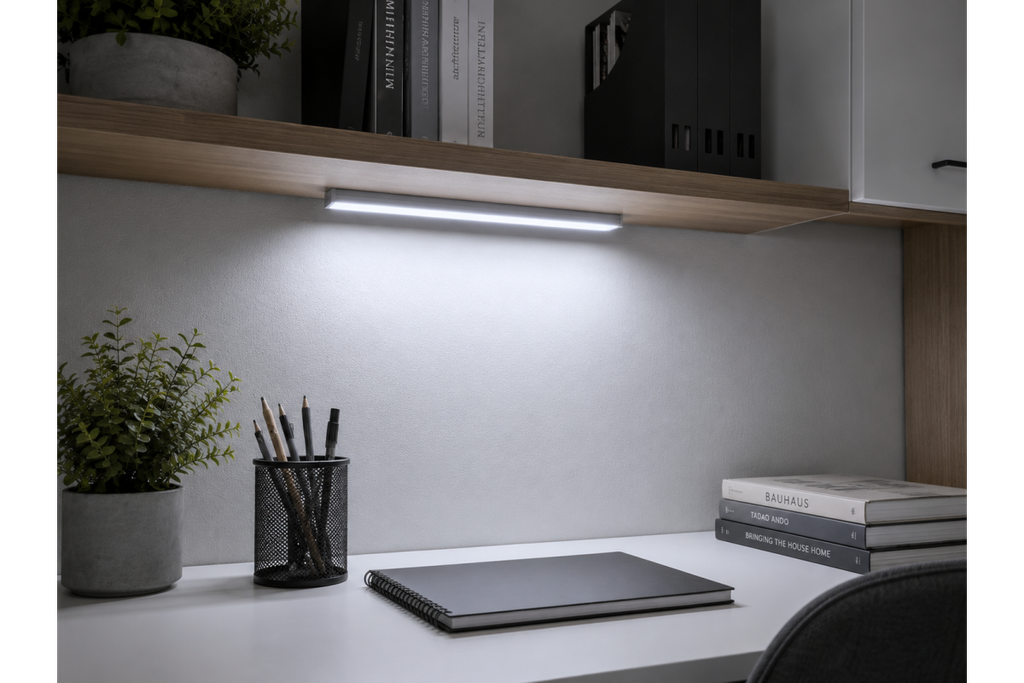
A small shelf, temporary workstation or display cabinet may need only a modest amount of light. Adding a conventional mains luminaire can be unnecessarily complicated when there is limited installation space or a preference for low-voltage equipment. Compact 5V LED luminaires offer another design route, particularly where a suitable regulated supply already exists. The simplicity of the voltage rating, however, should not hide important practical details. Connector type, current demand, cable length, heat dissipation and switching all affect the finished installation. A good result begins by identifying the real operating conditions rather than assuming that every small lamp can run from any USB socket.
Understand what a 5V rating tells you
A 5V luminaire is designed for a specified low-voltage input, but the label alone does not identify the connector or the power source. Some products use USB-style connections; others may have dedicated plugs or terminals. A regulated supply must provide the rated voltage and enough current for the particular fitting. Before connection, check the product marking and manufacturer’s instructions rather than relying on the shape of a cable end.
The Luminaires 5V category is a useful reference when considering compact low-voltage lighting. Compare individual models for their actual dimensions, input arrangement, power consumption and intended mounting method. An externally powered 5V fitting differs from a rechargeable luminaire that happens to charge through a 5V connector. Those products require different decisions about runtime, supply placement and access.
Calculate current before connecting multiple lamps
Electrical power relates to voltage and current. A small fitting rated at 5W on a 5V supply draws approximately 1A under its nominal operating conditions. Two identical fittings may require about 2A together, subject to their actual design and startup behaviour. Adding more lamps to a weak supply can cause dimming, flicker or protective shutdown. The supply must be selected for the total connected load using the manufacturer’s ratings.
Do not assume that an ordinary computer port or inexpensive adapter can supply every fixture arrangement. USB power sources differ in their available current and negotiation behaviour. Where several fittings share a distribution point, choose properly rated connectors and cables. Check the polarity when the product uses a dedicated DC connection, and protect all accessible joints from accidental strain.
Keep low-voltage cable runs realistically short
At 5V, a relatively small voltage drop represents a significant percentage of the supply. Long thin cables therefore matter more than they may appear to. A lamp near a distant USB adapter can be dimmer than an otherwise identical lamp connected through a short, suitable lead. The effect increases as load current rises. Avoid extending cables without considering conductor resistance and the manufacturer’s guidance.
Place the supply near the illuminated object where possible, provided the location is accessible and ventilated. When power must travel farther, use an appropriate conductor and verify voltage at the luminaire under load. A cable that operates satisfactorily with one low-power light may not work when several fittings are connected to the same branch. Small installations deserve the same basic electrical discipline as larger ones.
Pick a location that fits the compact beam
A 5V lamp often serves a restricted area: the inside of a niche, a short bookshelf, a desk accessory or a small display. Assess what the beam actually covers. A bright centre spot is acceptable for highlighting an object but less useful for evenly lighting a long row of books. For a shelf, mounting closer to the front may illuminate object faces; moving the source toward the rear can emphasise a back panel.
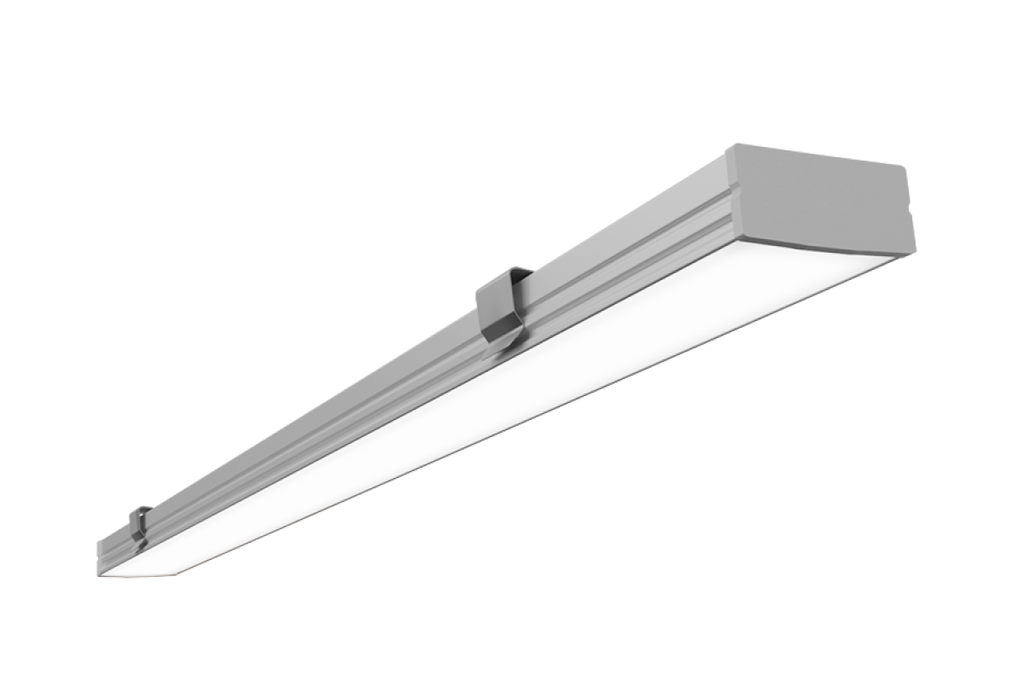
Check available clearance for the body, mounting bracket and cable bend. A fitting attached beneath a shelf must leave room for doors, stacked items and routine cleaning. The fact that a luminaire is electrically small does not mean it can be placed against any surface. Follow its mounting and thermal instructions, and consider how someone will reach it when the furniture is full.
Design around a portable power source carefully
A portable battery bank may be useful for temporary displays or occasional use, but compatibility and runtime require a specific calculation. Compare the energy available at the relevant output with the lamp’s actual load and account for conversion losses. Battery packs can also turn off automatically when their connected load is very small, depending on their electronics. Test the exact combination before treating it as a reliable exhibition or emergency setup.
Keep the battery bank in an accessible location where it will not be covered by insulating materials or exposed to liquids. Arrange cables so visitors cannot pull them out as they reach toward displayed products. A portable power source is most useful when the entire assembly can be set up, checked and removed without leaving damaged surfaces or loose wiring behind.
Choose a control method people will actually use
Compact lighting is often operated from a switch on the supply lead, a touch control or a compatible sensor. Choose the method according to the activity. A display that runs for several hours needs reliable manual switching, while a cupboard used for a few seconds at a time may benefit from automatic activation. Any added controller must be rated for the input and output of the selected luminaire.
Placement of the switch affects everyday comfort. A tiny inline switch hidden behind a cabinet is inconvenient if the light is used repeatedly. Locate controls where people naturally reach, while keeping them clear of hinges and sliding mechanisms. For portable arrangements, mark the power and control connections so the setup can be reproduced after transport.
Review visual comfort as well as efficiency
A compact emitter viewed at close distance can appear surprisingly intense. The most effective arrangement hides direct view of the source while directing useful light onto a surface. Diffusers, beam orientation and moderate output often provide a more comfortable result than choosing the highest-wattage fitting available. Test from seated and standing viewpoints because a shelf fitting may be visible from below.
Match the light colour to the object and surrounding room. Warm light can complement timber and soft interiors, while neutral light may be preferable for identifying items or reading labels. Where displayed colours matter, consult the colour-rendering specification of the exact unit. A well-positioned low-power luminaire often does more useful work than a brighter fitting aimed incorrectly.
Keep the final assembly simple to service
Before finishing the project, switch all fittings on together and check for stable operation over an appropriate test period. Confirm that the supply remains within its operating conditions and that every connection can be reached without dismantling surrounding furniture. Label cables if several lamps share one distribution point, especially in a temporary exhibition system that may be packed away and rebuilt.
Small 5V LED lighting projects succeed through careful matching of the luminaire, power source and physical location. A short, well-protected cable, correctly rated supply and comfortable beam make a compact fixture practical. The result is modest in size but fully deliberate in its electrical and visual design.

More Stories
Enchanted Elegance: Transform Your Space into a Glam Nook
Fashion Through the Ages: From Runway to Real Life Looks
Emerging Elegance: Unveiling the Next Big Beauty Trends of the Season